Faculty Leadership
Building Skills and Confidence for Teacher Leaders
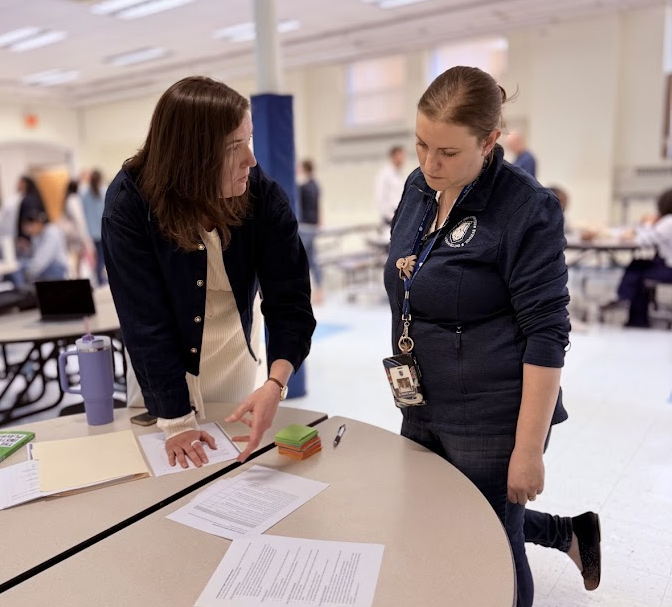
We support faculty leaders to build the skills and confidence to effectively lead their teams. Faculty leaders engage in learning experiences designed to support them to navigate the dual roles of teacher and leader, lead productive professional conversations, and facilitate data-informed decision making with measurable positive impacts on the experiences and outcomes of students, families, and educators. We guide teams through instructional change, and foster educator ownership of school improvement goals.
Sample Programs for School and District Leaders
Transformational Leadership In this workshop, we invite district leaders to join in community, leverage the expertise of their peers, and engage with researched-informed tools for increasing self-awareness and social awareness and for growing their leadership capacity. Participants leave with tools and skills they can immediately apply to their contexts, as well as renewed confidence in their ability to sustain themselves and communities at their sites.
Building and Strengthening Student Support Teams Participants will explore effective systems and collaborative practices that support thriving school communities. They will examine models of effective systems and practices for supporting students, assess and share their own systems and practices, and make plans for implementing practical strategies to improve student support systems in their school.
Building Teacher Leadership In this series, teachers gain skills and confidence to lead a team of peers. They engage in learning experiences designed to support them to navigate the dual roles of teacher and leader , lead productive professional conversations, facilitate data-informed decision making, guide teams through instructional change, and foster educator ownership of school improvement goals. Participants leave with an individualized teacher leader playbook.
Vicarious Wellness: How Leaders Can Practice and Spread Self-Care Emotions are contagious. The way a leader feels impacts the emotions of everyone else in a school community. Therefore, when school leaders practice strategies to process and regulate the emotions that arise in their demanding roles, they contribute to a culture that is conducive to the wellbeing of staff, students, and families. Participants in this workshop explore a toolbox of self-care strategies that leaders can use themselves while also supporting staff, students, and families to use them. Through this process, leaders can combat vicarious trauma, experiencing instead the “vicarious wellness” that arises when all community members are able to effectively activate their social-emotional skills.